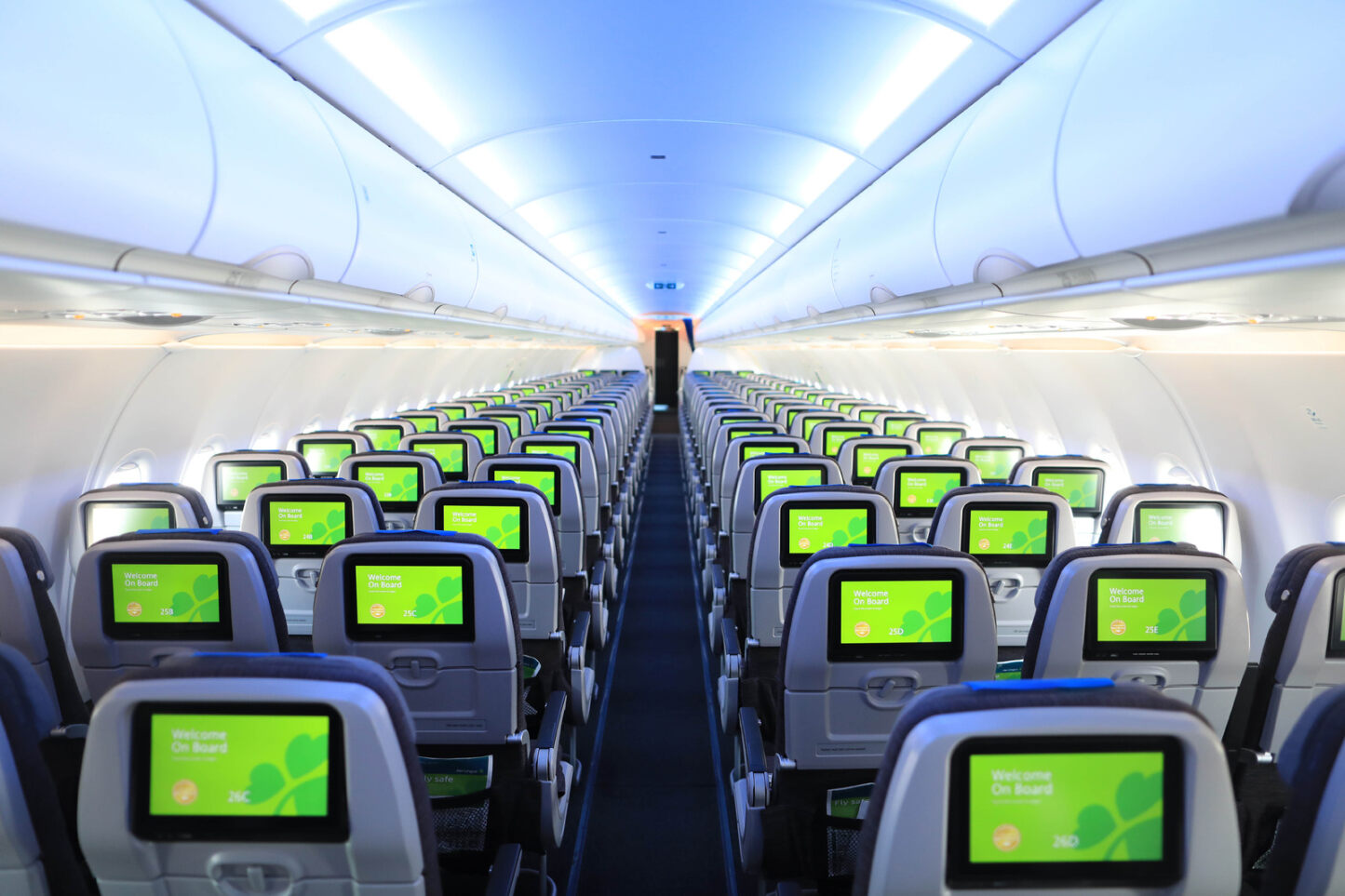
IAG is committed to environmental sustainability
IAG is committed to net zero CO₂ emissions by 2050.
IAG has led aviation action on climate change for over a decade. We played a key role in establishing the global CORSIA scheme, and in 2019 were the first airline group worldwide to commit to net zero emissions by 2050.
Now, we are delivering a package of measures to reduce our carbon footprint by 2030 and to reach net zero CO₂ emissions across our full operations and supply chain by 2050.
We are under no illusions, the challenge ahead is great. Aviation brings great benefits and 80% of emissions are for journeys over 1,500km where there are no reasonable alternatives to flying.
As an industry, we are currently reliant on fossil fuels and the low carbon solutions for aviation are more complex than for many other sectors. But we believe our ambitious goals are achievable.
With the IAG Flightpath net zero, strategy, launched in 2019, we are putting environmental sustainability at the heart of our business, ready to meet the task ahead. See our Annual report for details of our actions on:
- Fleet and operations
- Sustainable aviation fuel
- Carbon offsets and removals
- Supplier engagement and innovation
We are also using our influence to encourage industry partners to play their part and calling on governments to create the policies and incentives that will ensure we collectively meet our global climate goals.
Our vision
IAG has a vision to be a world leading aviation group on sustainability. That means using its scale, influence and track record to not only transform the business but drive the system-wide change required to create a truly sustainable aviation industry.
IAG is committed to delivering best practice in sustainability programmes, processes and impacts, while executing on Group strategy. Creating a truly sustainable business is fundamental to our long-term growth.
Our approach
IAG’s sustainability targets focus on material impacts, risks and opportunities identified by the Group.
IAG is working to deliver its 2025, 2030 and 2050 climate targets by carrying out emission-reduction initiatives, in collaboration with key stakeholders and proactively advocating for supportive government policy and technology development.
SAF is a key solution in IAG's transition plan to net zero. It reduces carbon emissions on a greenhouse gas lifecycle basis and typically by 80% or more compared with the fossil jet fuels it replaces.
IAG is a global business built on strong brands and the dedication of our talented colleagues. Our success is driven by people. Across the Group our operating companies invest in skills, careers and wellbeing, while maintaining an unwavering focus on safety and customer service. IAG is committed to safeguarding the health and safety of our employees, customers and all others related to our activities.
IAG provides evidence to support third-party environmental, social and governance (ESG) disclosures and rating assessment frameworks.
The Group and its operating airlines regularly engage with key stakeholders such as governments and regulators, shareholders, lenders and other financial stakeholders, trade associations, customers, suppliers, employees, communities, NGOs and academic institutions, to influence policy, drive action to meet our sustainability objectives and raise awareness of our programmes.
Our targets
20%
reduction in net Scope 1 and Scope 3 emissions by 2030
compared to a 2019 baseline
5
waste stream targets by 2030
10%
use of SAF by 2030
Net zero
CO₂ across our full operation and supply chain by 2050
Materiality assessment
IAG orientates its sustainability strategy around material issues: those which are most important to key stakeholders and which have the biggest external impacts.